Introduction to Multi‑Cloud and Hybrid Cloud
What is Multi‑Cloud?
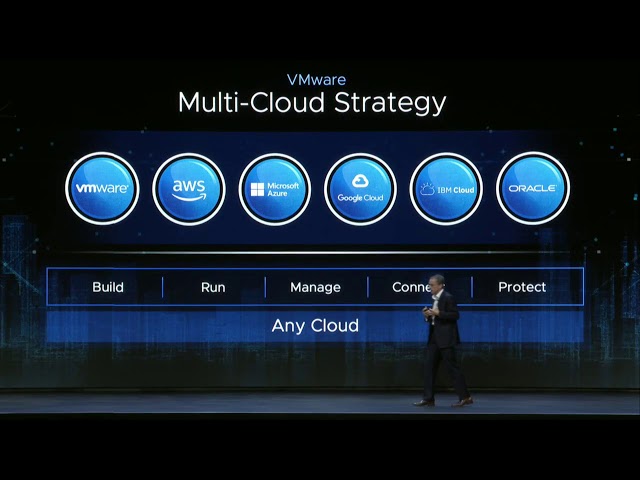
A Multi‑Cloud strategy involves using two or more public cloud service providers (e.g., AWS, Azure, Google Cloud) simultaneously. Organizations adopt multi‑cloud to maximize agility, avoid vendor lock‑in, and choose the best cloud for each workload.
What is Hybrid Cloud?
A Hybrid Cloud integrates on‑premises infrastructure (private cloud) with public cloud resources. It enables seamless workload mobility, unified management, and the ability to scale on demand.
Why VMware Cloud is Ideal for Multi‑Cloud & Hybrid Cloud
VMware Cloud provides a consistent infrastructure and operational model across on‑premises, public cloud, and edge environments. Because VMware’s virtualization stack (vSphere, vSAN, NSX) is already widely adopted in enterprise datacenters, extending these environments into the cloud becomes seamless.
Key VMware Cloud Capabilities:
- Consistent infrastructure across private and public clouds
- Unified operations using familiar VMware tools
- Easy workload mobility between environments
- Cloud‑native integration with hyperscalers (AWS, Azure, Google Cloud, Oracle Cloud)
- Enhanced security and governance through NSX and VMware Aria
Multi‑Cloud Strategy with VMware Cloud
a. Consistent Platform Across Clouds
VMware Cloud lets organizations run their workloads across multiple public clouds using the same VMware stack. This eliminates the need to refactor applications for each provider.
b. Freedom of Choice
Organizations can choose clouds based on:
- Performance needs
- Geographic availability
- Compliance requirements
- Cost considerations
- Specialized services (AI/ML, analytics, databases)
c. VMware Cloud on Major Hyperscalers
VMware Cloud is available natively on:
- VMware Cloud on AWS
- Azure VMware Solution (AVS)
- Google Cloud VMware Engine (GCVE)
- Oracle Cloud VMware Solution (OCVS)
- IBM Cloud for VMware Solutions
This enables consistent operations while taking advantage of each provider’s strengths.
d. Unified Management Across Clouds
Using VMware Aria (formerly vRealize) and VMware Cloud Console, enterprises get:
- Visibility into workloads across clouds
- Automated governance
- Cost management
- Performance monitoring
e. Application Modernization
Multi‑Cloud with VMware helps businesses modernize at their own pace:
- Migrate VMs without rearchitecting
- Integrate cloud‑native services using VMware Tanzu
- Incrementally containerize applications
Hybrid Cloud Strategy with VMware Cloud
a. Seamless Extension of On‑Premises Datacenters
With VMware Cloud, organizations can extend their existing VMware environment into the cloud without:
- Hardware refresh
- Complex migrations
- Application rewrites
This results in a true Hybrid Cloud experience.
b. Unified Network and Security Using NSX
NSX provides:
- Consistent network policies across clouds
- Micro-segmentation and zero trust
- Simplified VPN and Direct Connect/ExpressRoute integration
c. Disaster Recovery and Business Continuity
Hybrid Cloud solutions powered by VMware offer:
- Cloud-based DR using VMware Cloud DR
- On-demand scalability during peak periods
- Lower DR costs compared to traditional secondary sites
d. Cloud Bursting for High Demand
Hybrid Cloud enables “bursting” workloads from on‑prem to public cloud during:
- Seasonal traffic
- Data processing spikes
- Unplanned resource shortages
e. Modernizing with Kubernetes
VMware Tanzu enables:
- Unified management of VMs and containers
- Hybrid Kubernetes clusters
- Consistent DevOps workflows across environments
Benefits of Multi‑Cloud & Hybrid Cloud with VMware Cloud
1. Faster Application Deployment
Run workloads wherever they perform best—on‑prem or across public clouds.
2. Cost Optimization
Move workloads based on pricing, performance, or resource needs.
3. Avoid Vendor Lock‑In
Retain complete flexibility instead of relying on a single cloud provider.
4. Increased Resilience
Distribute applications across multiple regions and clouds.
5. Scalability and Elasticity
Scale on demand while maintaining consistent operations.
6. Security and Compliance
Apply consistent policies everywhere using VMware tools.
Common Use Cases
✔ Data Center Modernization
Move on‑prem VMware workloads to the cloud with no changes.
✔ Disaster Recovery as a Service (DRaaS)
Leverage VMware Cloud DR and site resilience options.
✔ Application Modernization
Integrate cloud-native services, Kubernetes, and microservices.
✔ Virtual Desktop Infrastructure (VDI)
Deploy Horizon across clouds for remote workforce enablement.
✔ High-Performance Computing
Burst workloads to public clouds for temporary capacity.
VMware Tools That Enable Multi‑Cloud & Hybrid Cloud
| VMware Platform | Purpose |
|---|---|
| vSphere | Compute virtualization foundation |
| vSAN | Cloud‑ready storage virtualization |
| NSX | Networking & security across environments |
| VMware Aria | Operations, automation, and cost management |
| HCX | Migration and mobility platform |
| Tanzu | Kubernetes & modern application platform |
| VMware Cloud DR | Cloud-based disaster recovery |
Conclusion
Multi‑Cloud and Hybrid Cloud strategies have become essential pillars of modern enterprise IT. VMware Cloud simplifies these strategies by providing consistent infrastructure, operations, and management across clouds, enabling organizations to innovate faster while maintaining control, flexibility, and security.
With VMware Cloud, businesses can confidently:
- Modernize their data centers
- Adopt multiple clouds efficiently
- Enable hybrid operations with unmatched mobility
- Future‑proof their digital transformation journey